Epoxy Flooring vs Polyaspartic Coatings: Which Is Better for Garages and Commercial Spaces?
If you are comparing epoxy flooring vs polyaspartic coatings for a garage or a busy commercial space, you are likely weighing cure time, UV stability, durability, and long-term maintenance. This guide explains the real differences in plain language so you can choose a system that looks great, stands up to daily use, and fits your timeline.
What These Coatings Are And How They Work
Epoxy is a two-part resin that bonds tightly to prepared concrete and forms a hard, protective layer. It is known for strong chemical resistance, custom colors, and decorative flakes or quartz. Polyaspartic is a fast-curing, advanced aliphatic polyurea that can be used as a clear or pigmented coat. It is popular where quick return to service and UV stability matter. Both can be combined in a system, such as an epoxy base with a polyaspartic topcoat, to balance strengths.
Cure Times And Return To Service
For many homeowners and facility managers, time is the deciding factor. Traditional epoxies typically require longer cure windows before foot traffic and vehicle traffic. Many polyaspartic products cure much faster, often allowing light foot traffic the same day and a staged return to service soon after, helping businesses avoid lost operating hours.
Avoid parking until the coating fully cures, per the manufacturer's guidance. Every project is different because temperature and humidity affect cure speed. Quick timelines are valuable during peak seasons when you cannot spare a long shutdown.
UV Resistance And Color Stability
Direct sunlight can cause standard epoxies to amber or yellow over time. That is why storefronts with big windows and south-facing garage doors often favor polyaspartic topcoats, which are known for superior UV stability and gloss retention. If your floor receives daily sunlight, a UV-stable finish helps the color you chose stay true longer.
Ask about UV-stable topcoats if your floor sees sunlight. This is especially important on light colors and metallic looks where any yellowing would be more noticeable.
Durability, Impact, And Chemical Resistance
Both epoxy and polyaspartic systems protect against abrasion, dropped tools, and common fluids found in garages and commercial settings. Epoxy builds thickness well and resists many chemicals when specified correctly. Polyaspartic brings strong scratch resistance and flexibility, which help it handle rapid temperature changes and impacts. The best results often come from layering: an epoxy build for body and texture, then a polyaspartic topcoat for toughness and UV hold.
Slip Resistance And Safety
Any high-gloss floor can become slippery when wet. Texture is controlled by the broadcast media and the topcoat. Flake, quartz, or anti-slip media can be added to both epoxy and polyaspartic systems to improve traction while keeping a cleanable surface. In commercial spaces with frequent spills or water carry-in, spec a medium to aggressive profile that balances safety with mopping ease.
Temperature, Seasons, And Scheduling
Polyaspartic chemistry allows installation in a wider temperature range, which is helpful during colder months or in unconditioned spaces. Epoxy installs are often scheduled when concrete temperatures are stable to ensure proper cure and adhesion. If your project window is tight or the space cannot be heated or cooled, ask about product options that match the season. This keeps your timeline realistic and protects the finish.
Local insight: In regions with freeze-thaw cycles and winter road salt, choose a system with a moisture-mitigating primer and a durable, UV-stable topcoat. This pairing helps resist salt tracking, hot-tire pickup, and seasonal swings.
Maintenance And Life Expectancy
Well-installed floors are easy to care for. Regular dust mopping and neutral cleaning keep grit from acting like sandpaper. Many clients plan a simple maintenance schedule and periodic topcoat refresh based on traffic level. Avoid harsh, unapproved cleaners that can dull the finish over time.
- Plan routine sweeping to remove abrasive grit in doorways and high-traffic lanes.
- Wipe up oil and chemicals promptly to protect gloss and color.
Life expectancy depends on traffic, environment, and whether heavy equipment is used. Retail entries, warehouse aisles, and garage hot-tire zones take more wear than storage corners. A proactive topcoat refresh restores gloss and traction before the base layers are affected.
Cost Factors Without Guessing Numbers
Costs vary by square footage, slab condition, the number of coats, decorative media, and the timeline you need. Heavier prep, moisture mitigation, and more complex designs can increase scope. When a quick return to service is critical, faster-curing polyaspartic systems can reduce downtime costs even if material costs are different. Your proposal should explain prep steps, coats, and performance targets so you can compare apples to apples.
Where Each Option Fits Best
Use epoxy when you want rich color builds, custom patterns, and a thick, substantial feel underfoot. Use polyaspartic when you need fast turnarounds, UV stability in sunlit areas, or superior scratch resistance in busy corridors. Many garages and commercial spaces select a hybrid: epoxy base for body and impact with a polyaspartic topcoat for UV and quick return.
- Residential garages and workshops: hybrid systems for balanced performance and curb appeal.
- Showrooms and retail: polyaspartic topcoats for clarity and fast open times.
- Warehouses and service bays: build with epoxy for the body, then seal with polyaspartic for abrasion resistance.
Surface Preparation Is Everything
Concrete must be sound, clean, and properly profiled. Diamond grinding is the standard for most projects and helps coatings bond at a microscopic level. Cracks and control joints may be repaired or honored, depending on the specification. Professional surface prep is the number one factor in longevity. A well-prepared slab paired with the right system outlasts a premium coating applied over poor prep.
Hot-Tire Pickup And Staining
Hot-tire pickup occurs when softening agents from warm tires interact with a floor that has not fully cured or lacks sufficient chemical resistance. High-quality epoxy and polyaspartic systems resist this when properly installed and cured. Parking mats in the first week and following the recommended cure timeline reduce risk. Do not rush heavy traffic before the coating is ready.
Design Options And Aesthetics
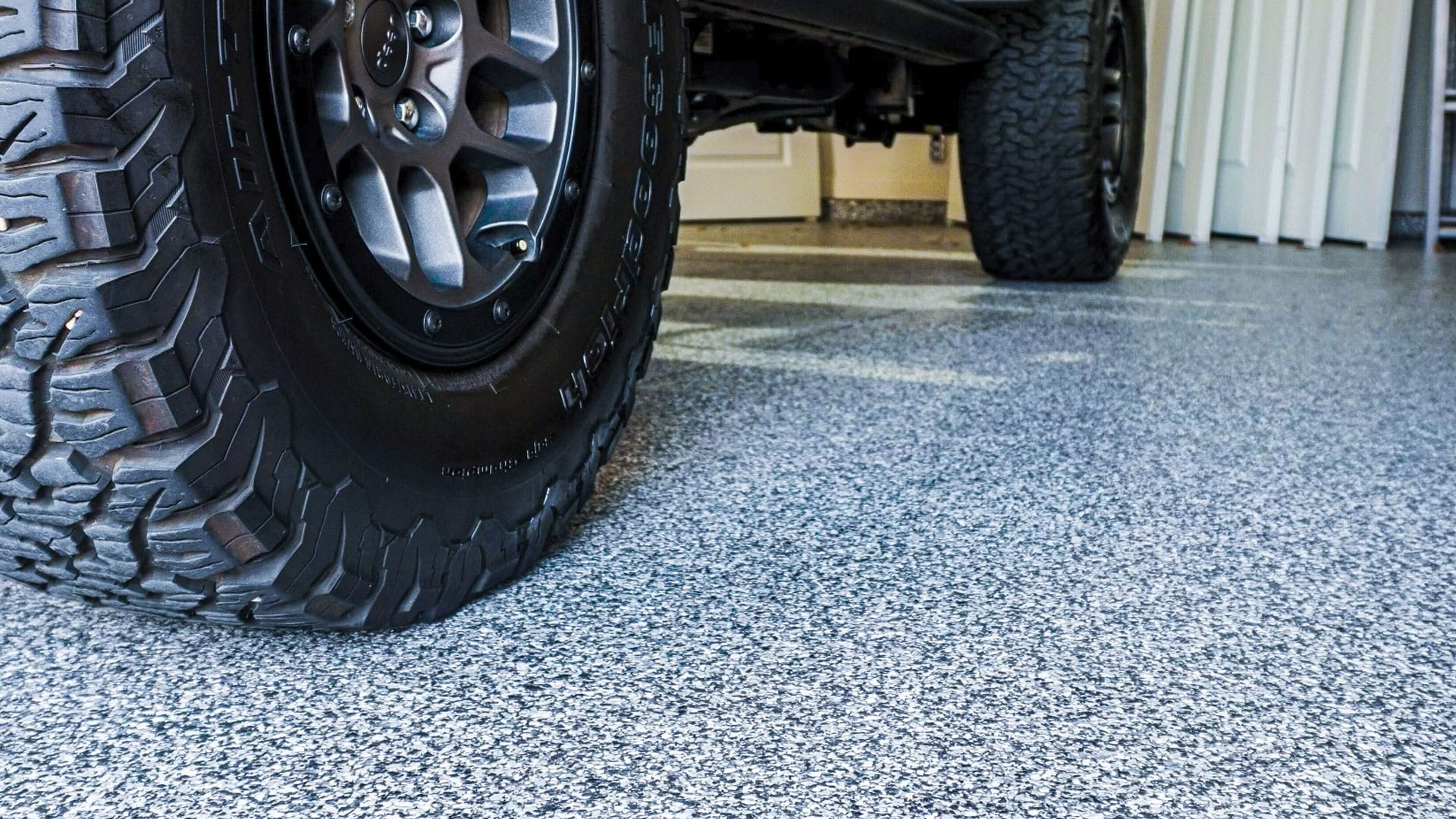
Both systems support decorative flake, quartz, and metallic looks. Epoxy often excels in metallic effects and deep color layers. Polyaspartic topcoats lock in broadcast media with excellent clarity. If sunlight reaches the floor daily, prioritize UV-stable clear coats so whites, grays, and light tans stay crisp. For commercial branding, ask about color-matched pigments and layout lines that align with traffic flow.
Environmental And Indoor Air Considerations
Low-odor, low-VOC options exist in both families. Ventilation planning, product selection, and scheduling after hours reduce disruption in occupied buildings. For sensitive environments, talk with your installer about application windows and temporary isolation so the space can reopen cleanly and quickly.
How To Choose The Right System For Your Space
Make a short list of priorities: timeline, sunlight exposure, traction needs, and the look you want. Share traffic patterns and what is stored or moved across the floor. With that, a professional can build a spec that fits your goals. If you are starting research, our epoxy flooring overview is a helpful place to see finishes, colors, and system build options offered by Floor Vision.
Common Myths, Clarified
Myth: polyaspartic flooring is always harder than epoxy. Reality: hardness varies by formulation and system thickness. Myth: epoxy always yellows. Reality: many clients use epoxy for build and color, then finish with a UV-stable polyaspartic. Myth: the thickest floor is always best. Reality: correct prep, moisture control, and topcoat selection matter more than chasing thickness alone.
When You Need Speed Versus When You Need to Build
Choose speed when downtime is your highest cost. Restaurants, showrooms, and service bays often lean on polyaspartic for fast reopens. Choose build when impact and texture control are top priorities, such as tool-heavy garages or warehouse loading zones. A hybrid build can deliver both if planned correctly.
Your Next Step
Ready to compare epoxy vs polyaspartic for your space and lock in the right system? Talk with Floor Vision about your timeline, sunlight exposure, and durability needs so we can recommend a coating that fits the way you use the space.
Have questions right now? Call 405-698-8910 to speak with a coatings specialist who can review options and scheduling.